
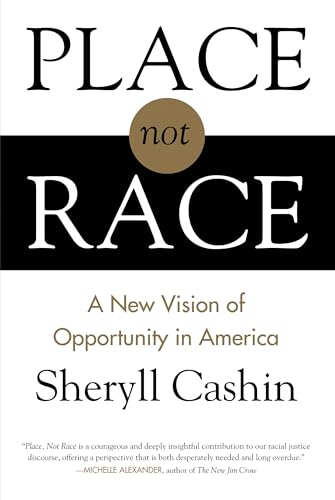
Place, not race : a new vision of opportunity in America / Sheryll Cashin.
Material type: TextLanguage: English Publisher: Boston : Beacon Press, [2014]Description: 153 pages ; 24 cmContent type:
 - text
- unmediated
- volume
- 9780807080405 (pbk.)
- 0807080403
- Affirmative action programs in education -- United States
- Discrimination in education -- Law and legislation -- United States
- Discriminación en la educación -- Derecho y legislación -- Estados Unidos
- Universities and colleges -- United States -- Admission
- Universidades y colegios -- Admisión -- Estados Unidos
- Minorities -- Education (Higher) -- United States
- Educational equalization -- United States
- Multicultural education -- United States
- Cultural pluralism -- United States
- Pluralismo cultural -- Estados Unidos
- 370.117 23
- LC 213.52 C338p 2014
| Item type | Current library | Home library | Collection | Shelving location | Call number | Copy number | Status | Barcode | |
|---|---|---|---|---|---|---|---|---|---|
 Libro
Libro
|
Biblioteca Juan Bosch | Biblioteca Juan Bosch | Humanidades | Humanidades (4to. Piso) | LC 213.52 C338p 2014 (Browse shelf(Opens below)) | 1 | Available | 00000162955 |
Includes bibliographical references (pages 125-153).
Démocratisation de l'enseignement États-Unis -- Discrimination en éducation États-Unis -- Discrimination in education -- Discrimination in education United States -- Educational equalization -- Educational equalization United States -- Jeunesse noire États-Unis Conditions sociales -- United States -- Universités Admission Aspect social -- Universities and colleges Admission Social aspects -- Youth, Black Social conditions -- Youth, Black United States Social conditions.
"Race-based affirmative action had been declining as a factor in university admissions even before the recent spate of related cases arrived at the Supreme Court. Since Ward Connerly kickstarted a state-by-state political mobilization against affirmative action in the mid-1990s, the percentage of public four-year colleges that consider racial or ethnic status in admissions has fallen from 60 percent to 35 percent. Only 45 percent of private colleges still explicitly consider race, with elite schools more likely to do so, although they, too, have retreated. Law professor and civil rights activist Sheryll Cashin argues that affirmative action as currently practiced does little to help disadvantaged people. Sixty years since the historic decision, we're undoubtedly far from meeting the promise of Brown v. Board of Education, but Cashin offers a new framework for true inclusion for the millions of children who live separate and unequal lives. Setting aside race in use of place in diversity programming, she writes, will better amend the structural disadvantages endured by many children of color, while enhancing the possibility that we might one day move past the racial resentment that affirmative action engenders"-- Provided by publisher.
There are no comments on this title.