
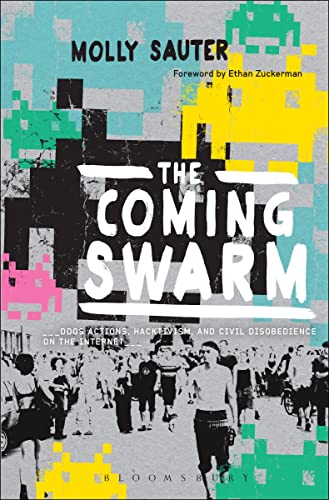
The coming swarm : DDoS actions, hacktivism, and civil disobedience on the Internet / Molly Sauter ; Foreword by Ethan Zuckerman.
Material type: TextLanguage: English Publication details: New York ; London : Bloomsbury Academic, an imprint of Bloomsburg Publishing Inc. 2014.Description: xv, 168 p. ; 21 cmISBN:
- 9781623568221 (hardback)
- 1623568226 (hardback)
- 9781623564568 (paperback)
- 1623564565 (paperback)
- 302.23/1
- HM 851 S261c 2014
| Item type | Current library | Home library | Collection | Shelving location | Call number | Copy number | Status | Barcode | |
|---|---|---|---|---|---|---|---|---|---|
 Libro |
Biblioteca Juan Bosch | Biblioteca Juan Bosch | Ciencias Sociales | Ciencias Sociales (3er. Piso) | HM 851 S261c 2014 (Browse shelf(Opens below)) | 1 | Available | 00000120322 |
Includes bibliographical references and index.
Introduction --
1. DDoS and Civil Disobedience in historical context --
2. Blockades and blockages: DDoS as direct action --
3. Which way to the #press channel? DDoS as media manipulation --
4. Show me what an activist looks like: DDoS as a method of biographical impact --
5. Identity, anonymity, and responsibility: DDoS and the personal --
6. LOIC will tear us apart: DDoS tool development and design --
7. Against The Man: state and corporate responses to DDoS actions --
Conclusion: The future of DDoS.
"What is Hacktivism? In The Coming Swarm, Molly Sauter examines the history, development, theory, and practice of distributed denial of service actions as a tactic of political activism. The internet is a vital arena of communication, self expression, and interpersonal organizing. When there is a message to convey, words to get out, or people to unify, many will turn to the internet as a theater for that activity. As familiar and widely accepted activist tools-petitions, fundraisers, mass letter-writing, call-in campaigns and others-find equivalent practices in the online space, is there also room for the tactics of disruption and civil disobedience that are equally familiar from the realm of street marches, occupations, and sit-ins? With a historically grounded analysis, and a focus on early deployments of activist DDOS as well as modern instances to trace its development over time, The Coming Swarm uses activist DDOS actions as the foundation of a larger analysis of the practice of disruptive civil disobedience on the internet. -- Provided by publisher.
There are no comments on this title.