
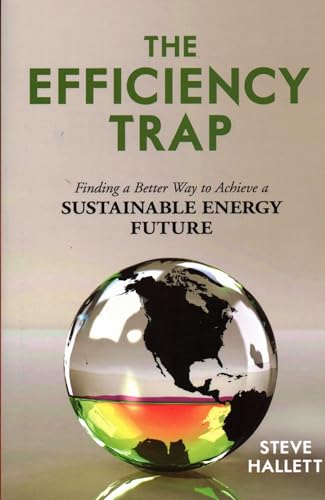
The efficiency trap : finding a better way to achieve a sustainable energy future / Steve Hallett.
Material type: TextLanguage: English Publisher: Amherst, New York : Prometheus Books, 2013Description: 337 pages : illustrations ; 23 cmContent type:
 - text
- unmediated
- volume
- 9781616147259 (paper : acidfree paper)
- 1616147253
- 333.79/4
- TJ 808 H186e 2013
| Item type | Current library | Home library | Collection | Shelving location | Call number | Copy number | Status | Barcode | |
|---|---|---|---|---|---|---|---|---|---|
 Libro
Libro
|
Biblioteca Juan Bosch | Biblioteca Juan Bosch | Humanidades | Humanidades (4to. Piso) | TJ 808 H186e 2013 (Browse shelf(Opens below)) | 1 | Available | 00000182010 |
Includes bibliographical references and index.
Prologue. The eighth deadly sin
pt. 1. The efficiency paradox. The petroleum interval ; The conventional wisdom ; The unconventional wisdom
pt. 2. Efficiency traps. Energy efficiency traps ; The energy substition trap ; The efficient food trap
pt. 3. Thinking in systems. Learning from nature ; All the oil in the world; Efficient business and economy traps ; The ecology of collapse
pt. 4. Beyond efficiency. Resilience : beyond sustainability ; Strengthening vital systems ; Building resilient communities
Epilogue. The key that unlocks the efficiency trap
One of the key tenets of the environmental movement is the need for greater efficiency in the use of our dwindling natural resources, especially coal, oil, and natural gas. If our products are designed to be more energy efficient, our environmental impacts will be reduced and fossil fuels will last longer. In this surprising new look at sustainability and conservation, environmentalist Steve Hallett argues this thinking is fatally flawed. In fact, based on the example of coal use throughout the Industrial Revolution, more efficiency leads to greater consumption and faster depletion of resources. This realistic appraisal of current environmental thinking will challenge environmentalists and industrialists alike. Yet recognising the inevitable limits of our growth and the shortcoming of current approaches is a necessary first step toward the establishment of a sound environmental policy.
There are no comments on this title.